








(Patios, pergolas, gazebos and privacy screens)


(Aluminum or glass)
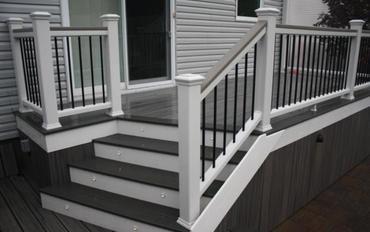

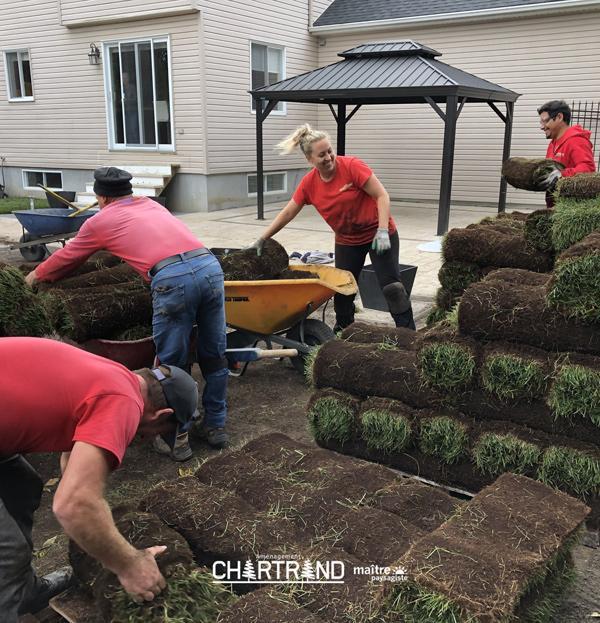
You dreamt it, we inspire it! Now it’s time to make your project a reality.
Our passionate team, the expert in turnkey projects, will accompany you throughout the process so that you have a memorable experience with our landscapers and all our team.
The cost of landscaping varies greatly depending on the scope of the project. For a basic project including interlocking pavers, plantings, and lighting on a medium-sized yard, you can generally expect to pay between $15,000 and $50,000. High-end projects integrating an outdoor kitchen, pergola, retaining walls, a full lighting system, and premium materials can easily exceed $75,000 to $100,000.
According to the APCHQ, the recommended investment is between 10% and 30% of the property’s value. Several factors influence the price: lot size, chosen materials, design complexity, required earthwork, soil quality, and site accessibility. A project can also be carried out in phases over multiple seasons to spread costs. The best way to get an accurate estimate is to request a personalized quote from a certified landscaper who will assess your specific terrain and needs.
The best period for landscaping in Quebec is between May and October, when the ground is fully thawed and weather conditions allow for efficient work. Spring (May–June) is ideal for planting, as vegetation has the entire season to take root before winter. For pavers, retaining wall, or earthwork projects, summer and early fall work very well. Planning, however, should start well in advance.
Contacting a landscaper in February or March lets you book a spot in the production schedule, finalize the design, and get the best material selections. Landscaping companies are very busy between May and August, so planning early avoids delays. Fence installation projects can also be done late in the season, through November, in certain conditions.
Yes. According to the Association provinciale des constructeurs d’habitations du Québec (APCHQ), landscaping can account for 20 to 30% of a home’s overall value. Several studies estimate that quality landscaping increases a property’s resale value by 15 to 20%, provided the work is done with durable materials and according to standards. Beyond the numbers, a well-landscaped property also sells faster because it creates a positive first impression upon arrival.
To maximize return on investment, focus on a clean and functional design rather than overly personalized arrangements that may not appeal to all buyers. The most profitable elements include a well-maintained paver driveway, a patio or deck (50 to 75% return), well-kept plantings, and exterior lighting. Working with a certified Maître Paysagiste ensures work meets BNQ standards, protecting your investment long-term.
A regular landscaper is a contractor who offers exterior landscaping services but does not necessarily hold a recognized professional certification. In Quebec, there is no mandatory licence from the Régie du bâtiment (RBQ) specifically for landscaping work, meaning anyone can present themselves as a landscaper without any guarantee of competence or standards compliance.
A Maître Paysagiste certification, on the other hand, requires adherence to strict quality and durability standards established by the Bureau de normalisation du Québec (BNQ), as well as a commitment to high professional practices. Choosing a Maître Paysagiste means ensuring that your paver foundations, retaining walls, and all your work are completed according to best practices, using quality materials and techniques suited to Quebec’s climate. Aménagement Chartrand has held this certification since its founding.
It depends on the type of work. Plantings, ground-level interlocking pavers, and garden beds generally do not require a municipal permit. However, constructing structures such as a patio, pergola, gazebo, retaining wall over one metre in height, or a fence typically requires a building permit issued by your municipality. Installing or modifying a pool enclosure also requires a permit in the vast majority of Quebec cities.
Regulations vary by municipality, so it is always best to check with your city’s urban planning department before starting work. An experienced landscaper is familiar with these requirements and can guide you through the process. If work is non-compliant, municipalities can require demolition or impose fines, making prior verification essential.
The most winter-hardy plants in Quebec are those in hardiness zones 3 to 5 according to Agriculture Canada’s scale. Among the most reliable shrubs are panicle hydrangea (Hydrangea paniculata), lilac, dogwood, juniper, and potentilla. For perennials, hostas, daylilies, coneflowers (Echinacea), and ornamental grasses like miscanthus are reliable choices that return year after year without issue.
For conifers, cedars (thujas), spruces, and pines are classic Quebec choices. Exposure to wind, road salt, and snow accumulation from rooftops should be considered. A good planting plan incorporates evergreens to maintain visual interest in winter, combined with perennials and shrubs that bloom from spring through fall. Your landscaper can design a planting scheme that looks great in all four seasons.
Landscaping a Quebec backyard with an inground pool must balance aesthetics, functionality, and regulatory compliance. The first step is planning the mandatory safety enclosure: under Quebec’s Regulation Respecting Safety Around Residential Swimming Pools, any pool with a water depth of 60 cm must be surrounded by a fence at least 1.2 metres high, with a self-closing and self-latching gate.
Next, the choice of pool surround (non-slip interlocking pavers, concrete slab, or natural stone) must account for wet foot safety and drainage. Beyond compliance, consider integrating functional zones: a lounge area to relax, a dining or outdoor kitchen space, plantings that provide privacy without creating leaf debris in the water, and lighting that extends evenings. Pool filtration and heating equipment must be installed more than one metre from the fence to prevent children from using it as a climbing aid. A well-planned project by a certified Maître Paysagiste can create a true outdoor living space around your pool.
Interlocking pavers cost on average between $18 and $25 per square foot installed, depending on the type of paver chosen and the complexity of the project. The material alone ranges from $3 to $10 per square foot, while professional installation labour (including excavation, crushed stone base, levelling, and laying) adds approximately $6 to $15 per square foot. For a standard driveway of approximately 500 square feet, the total budget can range from $9,000 to $15,000.
The final price depends on several factors: the type of paver (standard, decorative, or non-slip), required thickness (thicker for a garage entrance than a terrace), site preparation, complex laying patterns, and region. Popular Quebec brands such as Permacon, Techo-Bloc, and Rinox offer product lines at different price points. A more expensive paver upfront can be more economical long-term thanks to superior durability and minimal maintenance.
Yes, interlocking paver holds up well to freeze-thaw cycles, provided it is installed on an adequate base. The key lies in base preparation: a compacted crushed stone base at least 12 to 18 inches thick, a geotextile membrane to separate clay soil from the granular base, and a leveled sand bed on which the pavers are laid. Without this foundation, frost can heave pavers unevenly and cause settling.
The great advantage of interlocking paver over asphalt or poured concrete is its modular nature. The pavers are not bonded to each other, allowing them to shift slightly with soil movement without cracking. If a paver heaves or sinks after a hard winter, it can be removed and repositioned individually without redoing the entire surface. This is why well-installed interlocking paver lasts 25 to 30 years in Quebec, compared to approximately 15 years for asphalt.
Maintaining interlocking pavers is relatively simple and inexpensive. A power wash or garden hose rinse once or twice per season is sufficient to remove dust, dirt, and debris. For stubborn stains (oil, rust), a specialized paver cleaner can be applied. Polymeric sand joints should be replenished every 2 to 3 years to prevent weed growth and maintain paver stability. An annual budget of $100 to $500 is realistic for routine upkeep. Applying a sealer is highly recommended, ideally every 3 to 5 years.
A sealer protects pavers from stains, water, calcium, and UV rays, while reviving colours and extending the installation’s lifespan. Sealers come in matte or wet-look finishes depending on the desired effect. In fall, sweep up dead leaves to prevent tannin stains, and in spring, check whether any pavers have shifted after the thaw and reposition them promptly.
Properly installed interlocking pavers with an adequate base can last between 25 and 30 years in Quebec, sometimes longer with proper maintenance. This longevity surpasses asphalt (approximately 15 years) and compares favourably to poured concrete (also approximately 25 to 30 years). Paver quality, the thickness of the granular base, and installation rigour are the factors that most influence longevity.
What sets interlocking pavers apart from other surfaces is ease of repair. If a section sinks or a paver breaks after several years, simply remove the affected pavers, correct the base underneath, and replace them, no need to redo the entire surface. This feature makes interlocking pavers more economical in the long run despite a higher initial cost.
Interlocking pavers and poured concrete slabs are two popular options for driveways and terraces in Quebec, but each has its strengths. Interlocking pavers offer more variety in colours, patterns, and textures, and their modular nature makes them easier to repair, a damaged paver can be replaced individually. They also handle freeze-thaw soil movement better because joints absorb minor deformations. Installed price ranges from $18 to $25 per square foot. Poured concrete slabs are generally less expensive (between $7 and $15 per square foot installed) and offer a smooth, uniform surface.
They can be stamped or tinted to mimic natural stone or paver appearance. The main drawback in Quebec is that a crack in the concrete is difficult to repair aesthetically, often an entire section must be redone. Concrete also tends to crack under freeze-thaw cycles if not properly reinforced and poured. For a residential driveway subject to vehicle traffic, interlocking pavers are generally recommended for their durability and ease of long-term maintenance.
Contact
us!
Pour fournir les meilleures expériences, nous utilisons des technologies telles que les cookies pour stocker et / ou accéder aux informations de l’appareil. Le consentement à ces technologies nous permettra de traiter des données telles que le comportement de navigation ou les identifiants uniques sur ce site. Le fait de ne pas consentir ou de retirer son consentement peut nuire à certaines caractéristiques et fonctions.

